AI Overview: This Hog Valkyrie control deck averages 3.4 elixir and plays at a medium pace. The Valkyrie and Inferno Tower defend, the Musketeer shoots, and the Hog counter-pushes. Hog Rider’s best list wins 61.2% over about 3,800 battles, though this exact build has no tracker sample. Every price, rarity and 2026 change is rechecked below, so you can trust each number and skip the guesswork.
Last Updated: October 2026
Key Points:
- The eight cards cost 27 elixir, which is 3.375 and shown as 3.4 on average.
- Hog Rider had no 2026 change, and his best list wins 61.2% over about 3,800 battles.
- Valkyrie’s base lists all win 47.8% or less, and her Evolution tornado damage was halved in August.
- Poison hits a Crown Tower for 168, down from 184, and its best list wins 68.6%.
- Inferno Tower had no 2026 change, and its best list wins 65.8% over about 3,000 battles.
The Hog Valkyrie Control List, Priced Card by Card




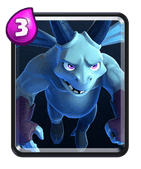
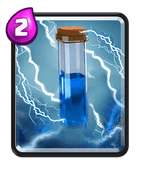
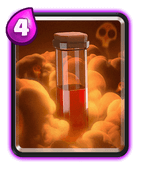
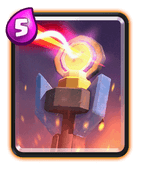
The big idea. Defend with a small elixir lead, then counter-push with the Hog. A medium deck wins by trading well, not by rushing.
Matchups. The original says medium control has an advantage against fast beatdown and a disadvantage against slow siege. Against beatdown, the Inferno Tower and Poison hold. Against siege, you must pressure early. The rule: shift gears, do not lock in.
| Card | Elixir | Job in the deck | 2026 status |
| Hog Rider | 4 | Win condition | No 2026 change; best list 61.2% over about 3,800 |
| Musketeer | 4 | Ranged damage and air defense | No 2026 change; Evo and Hero lists mostly 53% or more, best Hero 62.1% |
| Valkyrie | 4 | Ground splash and tank answer | Evo tornado damage halved in August; all eight base lists 47.8% or less |
| Fire Spirit | 1 | Cheap swarm answer and cycle | Hitpoints 230 to 215 (Aug 4), damage 207 to 215 (Sep 16); best list 62.9% over 707 |
| Minions | 3 | Air damage and distraction | No 2026 change; best list 65.2% over 2,300 |
| Zap | 2 | Cheap reset | Crown Tower damage 58 to 48 on June 1; Evo Zap 77.0% over about 1,000 |
| Poison | 4 | Spell for offense and defense | Crown Tower damage 184 to 168 on June 1; best list 68.6% over about 3,800 |
| Inferno Tower | 5 | Tank killer | No 2026 change; best list 65.8% over about 3,000 (LogBait) |
Check the table for each card’s price, role and 2026 note.
Zoom out. The Valkyrie is the weakest data point here, with every base list at 47.8% or less. If she loses more, the middle of the deck gets thin, and the Inferno Tower has to cover more. A weaker Valkyrie would slow the whole plan, and that slowdown is the first negative to watch.
What Changed in 2026
The short version. The Hog Rider, Musketeer and Inferno Tower did not change. Poison hits a tower for 168. Zap hits for 48. Fire Spirit has less health but more damage. The Valkyrie’s Evolution got weaker.
Final word. Balance is the whole point. Do not tilt to one side too early.
Plain talk. This is a calm deck for calm players. It will not win by surprise, only by steady play.
One more way to see it. A medium deck is a Swiss army knife. It does many things fine and one thing great: switching between them.
In plain English. The Hog stayed the same, Poison and Zap hit a bit softer, and the Valkyrie lost some power. The balance holds.
Claims, rechecked. The write-up defines medium control as 3.3 to 3.8 elixir and splits it into fast-medium, pure medium and slow-medium. Those labels are the author’s, not an official term. The math is right: this deck’s 3.375 average falls in the fast-medium group. Treat every figure as a starting point, not a rule.
The fine print. Poison reaches 68.6%, Minions 65.2%, and the Inferno Tower 65.8%. The Musketeer’s Hero lists reach 62.1%. So the support cast is stronger than the Valkyrie, the one card to watch.
Card pages: Hog Rider, Valkyrie, Musketeer, Poison and Inferno Tower.
Zoom in. A jack-of-all-trades deck has no strong specialty. When the meta turns to slow siege decks, the original warns that medium control loses ground. If the Poison slips in a coming patch, expect the deck to feel clumsy until you adjust.
How to Play It Today
Counter-push. Defend with a small elixir lead, then send the Hog with the leftover troops. The tactic is a mix of offense and defense.
Last tip. Count your elixir before every counter-push. A small lead is enough for the Hog.
Last word. Short games reward a clear plan, and this list gives you one. Learn the first two plays, then trust the rest to follow.
Quick recap. Defend small, trade well, counter-push with the Hog. Watch the Valkyrie’s data.
Reality check. Switching takes practice. If you mix up the timing, the deck loses its edge.
Bottom line. Pick this list if you want a flexible deck. Defend, trade, and counter-push with the Hog.
Worth knowing. The deck’s strength is range. It can defend a fast cycle and a slow push with the same cards.
Upgrade order. Level the Hog Rider, Valkyrie and Inferno Tower first. The Musketeer and Poison come next. The Minions, Zap and Fire Spirit can wait.
Tips. The page shows other medium decks, such as a Miner Bandit list and a Battle Ram list. Each plays the same counter-push tactic. Open the linked card pages before you queue, since one balance patch can flip a trade.
Know your speed. A 3.3 to 3.4 deck plays like a fast deck, and a 3.7 to 3.8 deck plays like a slow one. This list sits at the fast end of medium.
Elixir math. The Inferno Tower, Hog Rider, Valkyrie and Musketeer cost 17 of the 27 elixir. The other four cost 10, or 2.5 each. So the deck shifts between offense and defense with ease.
Try it yourself: test Hog Valkyrie Control Deck yourself in the Clash Royale Deck Builder; it opens with every card in place. Average elixir: 3.4. The tracker holds no sample of this exact build, so its 2026 win rate is unknown.
Zoom out again. Balanced decks give up peak power. If the field gets faster or slower, the middle gets squeezed, and the deck needs a tilt in one direction.
Frequently Asked Questions
Is a Hog Valkyrie control deck good in 2026?
Hog Rider’s best list wins 61.2% and Poison’s best wins 68.6%, but this exact list has no tracker sample, so test the Valkyrie slot first.
What is the average elixir cost?
27 elixir across eight cards, or 3.375, shown as 3.4.
What is a medium control deck?
A control deck whose average cost runs from 3.3 to 3.8 elixir, so it can defend fast cycles and slow pushes.
What is a medium deck’s weakness?
Slow siege decks, and being only good, not great, at anything.
Does this deck need epic cards?
Only one. Poison is an epic.
Original Guide, Kept in Full
The text below is the original page, kept in full. It was written between 2016 and 2024, so some details are out of date. The tips and numbers above use 2026 sources.
Hey guys! Its me Blaze Stone back with another guide for you all! This is my 2nd guide of the series ‘Advance Control Decks’.
Let’s talk about Medium Control deck today!
You can see my earlier guides here:
- Control Deck 101
- Fast Control Decks
Everything You Should Know About Medium Control Decks
What is a Medium Control Deck?
A medium control deck is a control deck whose average elixir cost ranges from 3.3 elixir to 3.8 elixir which means it is a medium paced deck.
These decks are pretty versatile as they can defend against fast cycles as well slow pushes effectively as they have a balance of offense and defense and cheap and expensive troops.
Pros and Cons:
Pros:
- Very versatile.
- Have ability to give a good fight against all decks.
- Can shift from defensive to offensive more easily than other decks.
- Strong advantage against Fast Beat down.
Cons:
- Takes time to know when to shift from offensive to defensive and vice versa.
- Can have a hard-time gaining crowns because they can’t play as aggressively to damage as Fast decks and can’t form a big elixir advantage and strike hard like a slow deck.
- All-round balance even though beneficial can be a drawback sometimes as it isn’t strong in anything particular. Sorta like ‘Jack of all trades but master of none’.
- Strong disadvantage against Slow siege.
Types of Medium Control Decks:
Now, you won’t read this anywhere except here but this will help you understand Medium Control Decks better. Also, a big thanks to Bandit FTW to bring this point to attention to me.
He said that although his deck falls in medium speed range it is actually played like a fast deck. I actually though about this and many more decks came to my mind so that’s why I am gonna talk about this.
Also, the main reason this thing happens is because Medium speed range is transition zone between fast and slow decks.
So you actually get lot of difference between a 3.3 elixir deck and a 3.8 elixir deck even though they fall in the same speed range.
- Fast-Medium Control: These decks have a avg cost of 3.3 and 3.4 elixir. Even though they fall in Medium Range their play style tilts towards fast decks.
- Pure Medium Control: These decks have a avg cost of 3.5 and 3.6 elixir. They fall more or less exactly in between the Control deck avg cost range(2.5 to 4.5 elixir) which makes them balance in terms of defensive and offensive capabilities.
- Slow-Medium Control : These decks have a avg cost of 3.7 and 3.8 elixir. Even though they fall in Medium Speed range their play style tilts towards slow decks.
What principle/tactic it uses?
In the last guide. I talked (sorry wrote) about 2 tactics: Offensive control tactic and defensive control tactic.
Offensive control relies on continuous offense to restrict opponents offense where as Defensive Control relies on strong defense and gaining elixir advantage to strike hard.
As Medium decks have a balance between offense and defense, the tactic it follows is also a mixture of these two tactics and it is called ‘Counter-pushing’. Surprising eh? Counter-pushing means successfully defend the opponents push by gaining a bit of elixir advantage and then using the advantage to counter push with your win-condition and troops left on defense. This is the main tactic of medium control decks.
Fast-Medium Control decks follow both Offensive Control and counter pushing as they are basically fast control decks with more costlier defensive cards.
Pure Medium control decks mostly follow counter-pushing but as they are in between they can shift from counter-pushing to offensive control and defensive control as per the opponents deck and playstyle.
Slow-Medium Control decks follow defensive control and counter pushing tactics as they are basically slow control decks with a cheaper offensive cycle.
What is the general game plan?
The general game plan should be heavily based on counter pushing!
Start your games slow with sending lone win condition to scout his counter or make passive plays like placing Musketeer behind king tower.
Play defensive in the first 2 minutes and do weak counter pushes to keep on offense and pressure.
In the double elixir time, go on the offensive mode and counter push aggressively by using troops left on defense as well as new troops and spells dealing as much damage as you can.
Finally, in OT shift to ultimate defensive mode and use spell cycle to win.
What win conditions should be used?
Miner: The ultimate counter pusher. Decent HP and ability to pop anywhere makes him best for such decks.
Hog Rider: The most versatile hog comes here as well. High Damage, decent HP and good speed and cheap cost makes him great in such decks.
Battle Ram: This card was underrated when released, suddenly rose in popularity and now disappeared again. This card is pretty good counter pusher as it can tank hits and destroy any buildings.
Graveyard: This card when played right is so OP. If not countered properly, it can devastate a tower.
Threat cards: These cards are not used as win conditions but more like as a threat that if not countered can deal lot of damage. Players play them(or rather act) as their win-condition but don’t actually treat (or depend on) them as their win condition. Instead the above cards are used as the win-conditions.
P.E.K.K.A.: P.E.K.K.A. in control decks is treated more like a tank and defensive card while the win condition is actually Miner, Hog or Battle Ram. People focus more to defend P.E.K.K.A. while the actual damage is dealt by the other win condition.
3 Musketeers: 3M in control decks are used to apply pressure on both lanes while the player actually focuses on attack on one lane. 3M split in the ratio 1:2 so on the lane with 2M they drop a mini tank. This is not a proper push but is vary powerful way to apply pressure. And the actually push is on the other lane with 1M with the win-condition(Miner, Hog or ram) and a swarm cards. So the player doesn’t really concentrate on 2M but on the 1M. The opponent has to defend both of them but mostly uses his spells on 2M while using a cheap and less-effective defense on the 1M. This enable the 1M push to cross the defense and damage.
Examples:
This speed range has a lot of variety so giving a slot method isn’t possible so I will be sharing examples.
Hog Trifecta
Miner Bandit Control
I posted a guide for this deck before at here.
Battle Ram Poison
I also have a small guide on this deck. You can take a look at here for more details!
P.E.K.K.A. Miner Poison Burner
3M Ram Cycle
Graveyard Poison
I hope these decks will give you the basic idea of making Medium Control Decks.
Thats all folks! Hope you guys liked this guide and I will be glad if it helped you. Be ready for the next and final guide of this series ‘Slow Control Decks. Ask me about anything in the comments section below.
By Blaze Stone
Sources
Researched from the following (no links, listed for transparency):
- CryptoAIMeta card guides for these cards, built from RoyaleTracker October 2026 samples and SeeMeta 2026 balance changes
- SeeMeta, Clash Royale balance changes 2026 (page updated October 2026), read through search summaries
- Supercell official Clash Royale API, card list (elixir cost, rarity, unlock arena)
- The original clash.world page (2016 to 2024), kept in full below