AI Overview: Supercell revived Clash Royale by combining new card forms (Evolutions), easier rewards, a new mode, and campaigns aimed at former players. Its own 2026 review says re-engaged players doubled and new players grew almost 500% in 2025. Those are percentages, not player counts, and no public source says which change mattered most.
Last Updated: October 2026
Key Points:
- Supercell says re-engaged players doubled and new players grew almost 500% in 2025.
- Card Evolutions (June 2023) gave familiar cards a new twist instead of new characters.
- In April 2025 Supercell removed chest timers and gave rewards right after battles.
- No public source splits the growth between marketing, gameplay, and creators.
A mobile game does not usually get a second first impression. Players leave, their friends move on, and the app becomes another square they stop opening.
Clash Royale managed something more interesting. A game built around familiar troops, quick decisions, and small arenas returned to the conversation years after its original launch. The comeback raises a useful question for players and businesses alike: what makes an old game feel worth returning to? Worth reading next: Why Clash Royale Doesn’t Use Unity (Inside Supercell’s Titan).
The answer is bigger than one powerful card. Clash Royale Evolutions provided fresh gameplay, but access, rewards, community attention, and the experience after reopening the app all mattered to the revival story.
Supercell’s February 2026 annual review reported that re-engaged players doubled and new players grew almost 500% in 2025. Those are company-reported changes, not absolute audience totals. The review also acknowledged a decline from the recent peak and later added explicit credit for creators and the community.
Winning people back is difficult. Giving them reasons to stay can be harder. More on this world in our Games section.
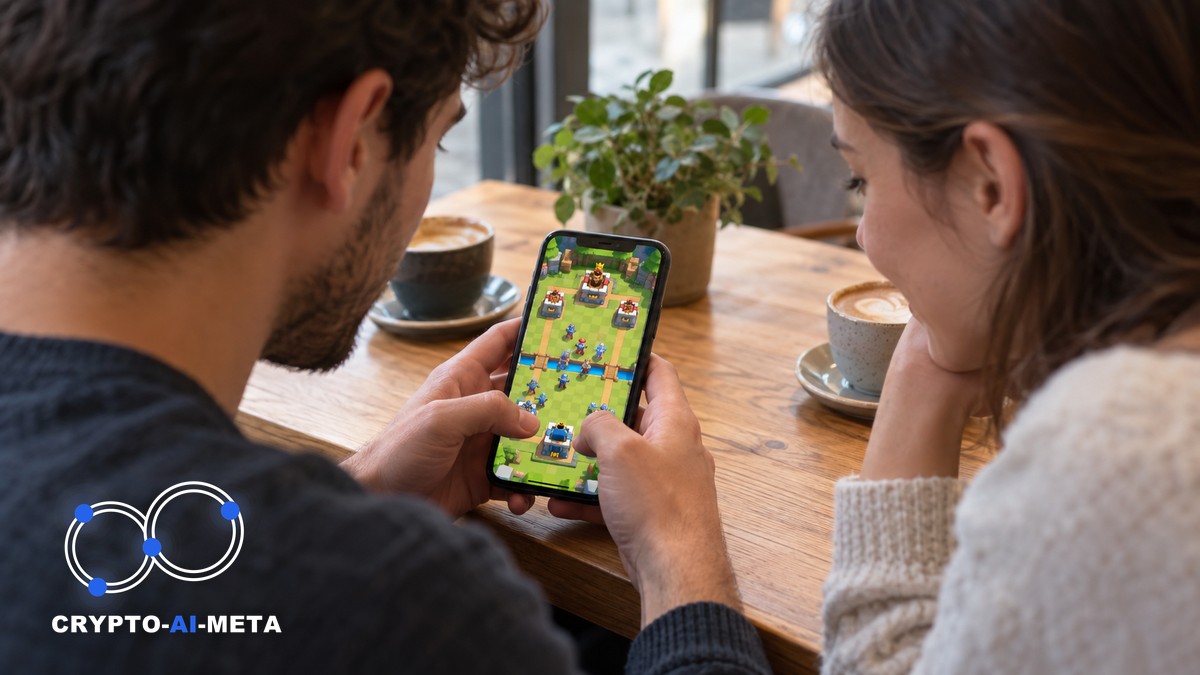
Table of Contents
A strong game was still underneath the friction
Clash Royale launched globally on March 2, 2016. Its basic appeal remains easy to explain: collect cards, deploy troops, manage resources, and attack towers while protecting your own.
The screen is small, but the decisions can be large. Spending too much on one push leaves a weak defense. Holding a counter too long can cost a tower. A familiar card can become dangerous in a different sequence.
You spend a limited resource to send troops at the other player’s towers, and you have to defend at the same time. It is chess with a clock.
That design gives players something to discuss. They can explain a missed defense, argue over a deck, or show a friend a surprising finish without requiring a long introduction.
An established game also carries an advantage a new release cannot purchase instantly: memory. Former players may recognize the sounds, characters, and rules even after a long absence.
But familiarity does not remove friction. A returning player still asks whether their deck is useful, whether upgrades are reachable, and whether the game now feels more demanding than rewarding.
This is the central business problem. Recognition can bring someone back to the door. The experience inside determines whether they unpack their bags.
What Card Evolutions changed
Supercell introduced Card Evolutions in June 2023. The launch added enhanced forms of existing cards, including Barbarians, Skeletons, Firecracker, and Royal Giant.
The original system required players to unlock an Evolution, equip it in an appropriate slot, and play the card through a specified number of cycles before its evolved form appeared. Those launch rules explain the design; they should not be mistaken for a complete guide to today’s slots or balance values.
The interesting part is what this does to familiar knowledge. Instead of learning an entirely unrelated character, a player recognizes an old card with a new tactical twist.
That can make an update easier to understand and more exciting to try. The familiar unit supplies context; the evolved behavior supplies surprise.
It also changes how opponents read a match. Knowing that an enhanced version is approaching can affect when to defend, which resource to save, and how much pressure to apply.
An Evolution therefore creates more than a collectible. It can create a new timing problem. For a competitive game, that is valuable because timing problems generate experimentation, replays, and discussion.
New content needs a reachable entry point
A feature can be exciting and still fail to bring someone back. If players believe it is beyond their budget or too far down a progression ladder, the announcement becomes something to watch rather than something to play.
Supercell’s February 2024 Perfect Match event offered an eligible player a free chosen Evolution. The campaign turned access into a seasonal invitation instead of leaving it solely as a distant collection goal.
That distinction is important. Advertising a new feature shows a possibility. Letting players use it gives them a reason to form an opinion.
Free access also creates a shared moment. Friends can compare choices, creators can demonstrate combinations, and former players can try a mechanic without first deciding whether to spend.
None of this establishes that every giveaway produces growth. A reward can attract brief interest without improving the underlying experience. The more useful question is whether the gift opens a path to enjoyable play.
The catch: Supercell shared percentages, not player counts. “Doubled” shows the direction, not the size.
A shiny invitation works best when the party is worth staying for.
Over the next year, accessible card forms and clear return rewards could remain stronger revival tools than simply adding more systems. Players returning after months away may value a useful starting point more than a larger menu. If new mechanics keep accumulating faster than explanations improve, novelty could become another reason to leave.
Barboltian sold the feeling of coming back
In February 2025, Supercell partnered with Michael Bolton for a Valentine’s campaign built around a singing Barbarian called Barboltian. The announcement explicitly connected the project to long-time players who had left.
The campaign reworked a familiar love song into a message aimed at former fans. It used an established character, humor, and an emotional cue instead of requiring viewers to understand a balance patch.
Supercell’s later annual review linked this campaign and a free Barbarian Evolution gift to the start of the surge. That is the company’s explanation, not an independently measured allocation of growth between marketing and gameplay.
The broader marketing lesson is straightforward. A returning player does not necessarily need a list of every update. They may first need a reason to care that the game still exists.
Humor can reopen that relationship without demanding much commitment. A familiar character can remind someone why the game once felt social, competitive, or simply fun.
Marketing then hands the player to the product. If the first session disappoints, the joke has done its job and the business has not.
Removing chest timers changed the reward rhythm
Supercell’s April 2025 update removed chest queues, timers, and keys. It replaced that structure with immediate battle rewards and daily win-based rewards.
This was a concrete change to the rhythm of play. Under a waiting system, winning and collecting can be separate moments. Immediate rewards make the relationship easier to see.
A player finishes a battle and receives something now. That does not automatically mean every player earns more, but it reduces one kind of delay between action and feedback.
For returning players, simpler reward handling can reduce the amount of remembered procedure required to enjoy a session. The game asks less administrative attention before showing progress.
Still, removing a timer is not the same as removing all constraints. Daily reward structures continue to shape incentives, and the value of the new system depends on what players actually receive.
The fair assessment is about clarity and pacing, not an unsupported promise of unlimited progression.
This is useful beyond gaming. A product can lose customers because its central activity is buried beneath waiting, managing, or remembering. Removing that extra work can make an old product feel newly respectful of the user’s time.
Merge Tactics offered another reason to open the app
The June 2025 update introduced Merge Tactics, a four-player turn-based mode using familiar Clash Royale troops. Players assemble teams, manage resources, and combine units, with troops fighting automatically after each deployment phase. Related reading: Clash Royale Merge Tactics Update: What Changed & How to Win.
That differs from the regular game’s real-time card deployment. It gives the app another type of decision rather than merely another card inside the same match.
For some players, a different mode could provide a break from competitive ladder pressure. Others may enjoy the troop collection and characters while preferring a planning-focused format.
Those are plausible audience benefits, not proof that Merge Tactics caused a specific share of the comeback. The public update notes describe the mode; they do not isolate its effect on overall retention.
The product tradeoff is worth examining. More modes can broaden an app’s appeal, but they can also complicate navigation and divide attention.
A useful mode earns its place by giving people a distinct reason to play. It should not exist merely to make the update list longer.
For a mature game, experimenting inside an established world can lower the explanation burden. Players already understand many of the characters, even when the rules around them change. AI is now speeding up this kind of prototyping; see AI builds games from one sentence.
Creators make a game socially visible
A game can improve without becoming a topic of conversation. Someone has to make the improvement visible, understandable, and worth sharing.
Creators can supply that bridge through matches, tutorials, challenges, jokes, and live reactions. They turn a feature into an experience an audience can imagine joining.
The economic value is broader than an advertisement. A compelling match teaches viewers the stakes. A friendly rivalry gives them a reason to follow the next session. A recognizable mistake invites comments from people who have made it too.
This is why credit matters. Supercell added an acknowledgment of creator, professional-player, and community contributions to its annual review after the original post drew criticism.
But creator attention should not be reduced to one personality or one viral clip. Without evidence separating those effects, claiming a single person revived the game would oversimplify the story.
The useful analysis is that social attention and product quality can reinforce each other. People see the game, try it, and create more material for others to see.
That relationship can reverse when the most shareable experiences become frustrating ones. How platforms pay the people behind this attention is covered in Roblox vs. Fortnite.
Progression stayed a moving target
A revival does not freeze the product. Supercell continued changing Clash Royale’s progression after the strong 2025 period.
Its November 2025 announcement described removing Elite Wild Cards, simplifying upgrade resources, and introducing Level 16. The company presented the changes as a clearer route for progression and a new goal for players with advanced collections.
Those goals can pull in different directions. A player who wants more to achieve may welcome another level. A player who felt finished may see another requirement before competing comfortably.
Neither reaction proves how the whole audience responded. It illustrates why progression changes require care: the same update can create purpose for one group and exhaustion for another.
By May 2026, Supercell had announced Collection Levels and reworked Masteries. The collection measure combines card levels with extra credit for unlocked Evolution and Hero forms.
This later update belongs to the story of sustaining and repairing the experience. It cannot be used as a cause of growth that occurred in 2025.
Chronology matters. Otherwise, a comeback article becomes a pile of updates arranged to sound like a strategy that was perfectly obvious all along.
Revival does not prove permanent loyalty
The key question after a comeback is how long the renewed attention lasts.
Downloads, returning players, engagement, and revenue describe different things. A person can reinstall without becoming a regular player. A frequent player can spend nothing. A paying player can still be dissatisfied.
Those distinctions matter when evaluating the health of a live game. An impressive growth percentage does not supply an absolute audience size or show the behavior of every cohort.
Likewise, company revenue should not be relabeled as one game’s revenue. Supercell operates multiple games, and public commentary does not provide a complete revenue breakdown for every title.
A stronger public assessment would combine return rates, longer-term retention, progression experience, and player satisfaction. Those measures would help distinguish a burst of curiosity from a lasting change.
The available announcements support a significant revival and an active product team. They do not establish a permanently solved retention problem.
For readers, this is the difference between celebrating a recovery and assuming the difficult work is over.
What October 2026 shows about the next chapter
Supercell’s October 5 Shocktober announcement includes Hero Electro Wizard, Electro Giant Evolution, an album event, special modes, and a returning 20-Win Challenge.
The album runs from October 6 to November 2 and offers the Electro Giant Evolution for completing it. These are current event details, separate from the historical explanations for the earlier comeback.
The season illustrates how many reasons a live game can offer to return: a new card form, a collection target, a competitive milestone, or a short-lived variation on familiar play.
The challenge is making that variety understandable. A person who enjoys one activity should not need to master every system to feel they belong.
Over the next few seasons, Supercell may lean further into events that connect free rewards, familiar characters, and social challenges. That could help former players rejoin their friends. The downside is event fatigue: too many limited windows could make a relaxing game feel like a calendar of obligations, weakening the goodwill those events are meant to build.
The business lesson for game developers
The useful lesson is not to copy Evolutions into every game. The mechanic works within a particular set of cards, counters, resources, and expectations.
Start instead with the reason people stopped. Was the game confusing, unrewarding, socially quiet, or difficult to return to after a break?
Different causes demand different work. More marketing does not repair a frustrating first session. More content does not necessarily clarify progression. A generous gift does not fix an unfair-feeling match.
A practical revival plan would connect the invitation with the experience that follows it. Show players something they recognize, offer an achievable way to participate, and make the first sessions understandable.
Then measure what happens after the launch excitement. Did people continue playing? Did they recommend the game? Did the new audience find the same value as established players?
These are proposed evaluation questions, not a claim about Supercell’s internal dashboards.
For a business, sustained attention is more useful than a temporary spike. The next update should serve the people who returned, not merely produce another headline about bringing them back.
Where AI fits, and where it does not
CryptoAIMeta often covers AI tools and game creation. Clash Royale’s comeback is a reminder to separate production tools from the reasons people play.
The sources reviewed here do not establish that generative AI caused the revival. Adding that claim would turn a documented product story into speculation.
AI tools may help studios draft concepts, organize feedback, or accelerate selected development tasks. Whether those uses improve a game depends on the results, not the number of assets produced.
A new illustration is easier to generate than a trustworthy competitive environment. Players still judge match quality, understandable rules, and whether their time feels respected.
The more durable opportunity may be using better tools to identify friction and test improvements. Even then, teams need evidence from real play rather than confidence from a persuasive model output.
For developers and investors, the distinction is important. Faster content production can support a strategy. It is not a strategy by itself. Smarter game characters are the next test; read AI NPCs that remember you.
The comeback still depends on the next session
Clash Royale’s revival combined recognizable gameplay with new ways to engage. Evolutions refreshed familiar cards. Rewards and progression changed. Campaigns reminded former players to look again. Creators helped make the game visible.
No public source reviewed here assigns a precise share of growth to each factor. The strongest account therefore treats them as interacting parts rather than a single magic fix.
The next phase could reward restraint as much as invention. If Supercell keeps progression understandable and new mechanics reachable, the game may retain more returning players between major campaigns. If spending pressure and complexity rise faster than enjoyment, the same community attention that supports a comeback could accelerate another downturn. Trust remains part of the product.
The title’s evolution has two meanings: the card mechanic and the ongoing work of changing an old game without losing what people loved.
A comeback gets players to reopen the app. The next enjoyable battle gives them a reason to keep it open. For where mobile games are heading, see why Meta moved Horizon Worlds to mobile and Meta’s AI game tools and Instagram feeds.
Sources
- Supercell, The Best Games Haven’t Been Made Yet, February 10, 2026; creator acknowledgment added February 12, 2026.
- Supercell, Season 9: Birthday Royale, March 2, 2020 (global launch date).
- Supercell, Card Evolution, June 18, 2023.
- Supercell, A Perfect Match, February 4, 2024.
- Supercell, Introducing Barboltian This Valentine’s Day, February 14, 2025.
- Supercell, April Update!, March 31, 2025.
- Supercell, June Update 2025, June 2025.
- Supercell, New Game Mode: Merge Tactics!, June 29, 2025.
- Supercell, Coming in the Next Update…, November 10, 2025.
- Supercell, December Update 2025, November 21, 2025; update live November 24.
- Supercell, New Collection Levels & Mastery Changes, May 13, 2026.
- Supercell, New Season: Shocktober!, October 5, 2026.