AI Overview: Clash Royale runs on Titan, Supercell’s own game engine built for mobile. Public sources point to mobile focus, control over shared systems, and in-house tools as the reasons. They do not prove Unity could not run the game, and no public benchmark compares the two engines.
Last Updated: October 2026
Key Points:
- Supercell confirmed Clash Royale uses Titan in an April 2026 engineering story.
- Titan was built for mobile, including less powerful devices.
- Unity offers source-code access under Enterprise terms, so “Unity users cannot see the code” is wrong.
- The 35-second to 5-second loading fix was in Brawl Stars, not Clash Royale.
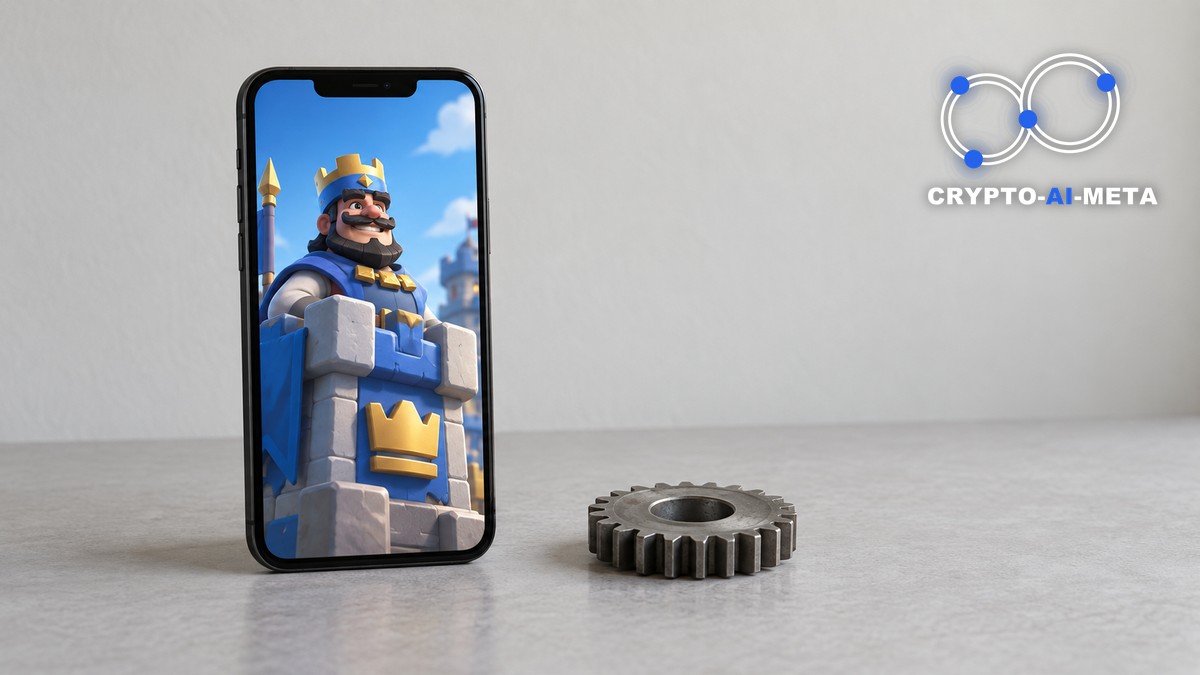
Table of Contents
The short answer: Clash Royale runs on Titan
Clash Royale uses Titan, Supercell’s own game engine. Supercell confirmed that connection publicly in its April 2026 account of the technology behind its games. Titan is shared internal infrastructure, with tools and systems built around the company’s needs.
So why doesn’t Clash Royale use Unity? The public evidence supports an explanation centered on a long-running internal technology path, a strong focus on mobile devices, and control over the systems game teams depend on. It does not establish that Unity could never run a game like Clash Royale.
Titan is Supercell’s own toolbox for building its games. Using it does not mean Unity is bad.
That distinction matters. Engine debates often turn into team sports: one logo wins, another loses. Supercell’s account tells a more useful story about specialization, shared work, and the cost of maintaining software for years.
This guide explains what the Titan game engine is, what its benefits mean for Clash Royale, and where the public evidence stops. Supercell has revealed enough to discuss the approach, but not enough to recreate the engine or prove every technical theory circulating online. More on this world in our Games section.
What a game engine does behind the arena
A game engine supplies reusable technology for building and running games. It can handle tasks such as drawing scenes, managing assets, and providing tools that help developers assemble content. The exact boundaries vary between engines and studios.
Think about a new troop arriving in an arena. Players see a character, movement, effects, and a battle outcome. Developers also need a way to bring artwork into the project, test its behavior, and deliver the result reliably on supported devices.
The engine is part of that process. It is not the whole game, and it is not automatically the entire server system. Supercell describes Game Tech as a broader organization with engine, platform, cloud, security, and AI responsibilities. Those categories should not be collapsed into one undocumented Titan feature list.
For a player, the engine’s name is less useful than its results. Does the game open quickly? Does it behave consistently? Can the team add content without breaking old systems? Those questions explain why a company invests in infrastructure that most players never see.
Titan grew out of Supercell’s own games
Supercell’s July 2026 engineering story describes Titan’s roots in code shared between game teams. Systems were reused across projects and gradually brought into an internal engine. That history explains why Titan is tied closely to the company’s production habits.
This is different from imagining a finished commercial engine selected from a catalog. Titan developed alongside live games, with both shared components and game-specific pieces. Its structure reflects practical needs that accumulated over time.
Clash Royale therefore sits within a wider technology relationship. A system used by several teams can become worth maintaining because improvements have more than one audience. A tool that saves work in one project may also help another, if their needs align.
The opposite is possible too. A feature designed around one game can become awkward when another team needs something different. Shared code provides a starting point, not a promise that every game can use every feature unchanged.
The public record supports Titan as Clash Royale’s engine today. It does not provide a complete launch-era comparison document explaining every option Supercell considered. Treat claims about a specific rejected Unity prototype or a secret engine-selection meeting as unverified unless evidence is supplied.
Why mobile specialization changes the calculation
Supercell describes Titan as built specifically for mobile, including less powerful devices. In the April story, that focus is presented as a way to avoid some problems associated with adapting a broad engine to a specialized target.
The useful idea is scope. An engine serving many different kinds of projects must accommodate a wide range of requirements. An internal engine can concentrate effort around the devices, workloads, and production methods its owner values most.
That does not remove performance work. A specialized system still needs testing, measurement, and maintenance. Narrowing the problem makes priorities clearer; it does not make weak hardware powerful or erase the cost of new content.
For Clash Royale, the engineering inference is straightforward: consistent access across a broad mobile audience is an important reason to value focused infrastructure. That is an inference about the business and technical fit, not a published benchmark against a Unity version of the game.
Over the next few years, mobile engines may face more pressure to support richer content without excluding older devices. Specialization could help teams keep those priorities aligned. The downside would appear if new features steadily increase memory and processing demands anyway, leaving players with slower sessions despite an engine designed around accessibility.
Owning the engine means owning the repair work
When a team depends on an internal system, it can investigate that system directly and coordinate changes with its maintainers. Supercell’s Titan examples emphasize this access: developers can address an underlying problem rather than only work around it at the game level.
That control has practical value when the same issue affects content creation or a live game repeatedly. A workaround may solve today’s symptom while leaving tomorrow’s update vulnerable. Fixing the shared cause can be the better long-term investment.
However, access is not the same as an easy fix. Developers still need to understand dependencies, protect existing behavior, and test the change. Owning the machinery also means being responsible when the repair creates another problem.
The comparison with Unity needs care here. Unity offers source-code access under its Enterprise arrangements. It would be inaccurate to claim that Unity users can never inspect engine code. Unity distinguishes Source Code Access for viewing and debugging from Source Code Adapt, which permits custom engine builds under separate terms. Neither arrangement is the same as owning the engine.
Titan gives Supercell control over its internal priorities. It does not free the company from device platforms, outside services, or the ordinary difficulties of software development.
A real example, with an important limit
Supercell’s July Titan story gives a concrete example from Brawl Stars. Some Android devices had loading times around thirty-five seconds. Supercell reports that the improvement brought loading down to roughly five or six seconds in the described case.
The article explains changes to asset loading, including work that could happen concurrently while respecting dependencies. It also describes handling incoming server messages until the relevant assets were ready. These are examples of changing shared technology to solve a visible player problem.
The lesson is useful for understanding Titan’s purpose: engineering work can improve the moments before gameplay begins. Faster access can matter greatly in a game designed for short sessions. Platform-level AI game tools are a different layer; see Meta’s AI game tools.
But those numbers belong to Brawl Stars. They are not Clash Royale measurements, a promise for every Android device, or a Unity-versus-Titan benchmark. Carrying them across games would make the story sound stronger while making it less accurate.
The catch: the loading win happened in Brawl Stars, not Clash Royale. Do not borrow the numbers.
A loading improvement also does not prove better matchmaking, lower network delay, or higher frame rates. Each outcome needs its own evidence. The strongest explanation uses the measured example for the thing it actually demonstrates.
The hidden advantage: tools for the people making games
Engine discussions often focus on visuals, but tools can matter just as much. Designers and artists need workflows that allow them to change content, see the result, and work alongside colleagues without unnecessary delays.
A simple hypothetical example makes this clear. If several people must edit one shared file, each person may need to wait or carefully coordinate changes. Splitting work into suitable independent assets can reduce that friction, provided the pipeline supports it safely.
That is general workflow analysis, not a claim about Clash Royale’s current editor layout. Supercell’s public Titan stories show that tools and production processes are part of the engine’s value, while leaving much of each game’s implementation private.
The current Product Lead, Game Engine listing adds another signal: Supercell wants a clearer product strategy, documentation, and adoption paths for Titan. An internal engine still has users. Their ability to understand and use a feature affects whether the engineering investment becomes useful.
Future improvements may be most noticeable in how quickly teams can test and ship content, rather than in a dramatic visual overhaul. Better tools could reduce repetitive work, but excessive standardization could also constrain unusual game ideas. The challenge will be sharing dependable foundations while leaving teams enough room to build differently.
Why Unity remains a reasonable option elsewhere
Unity provides tools for creating mobile games and measuring performance. Its current documentation describes profiling applications on target devices, including Android. That alone rules out the simplistic claim that Unity cannot support serious mobile optimization.
A studio choosing Unity can use established workflows rather than maintain an entire engine from the beginning. The practical attraction is often how much development infrastructure already exists, alongside the studio’s own code and content.
A studio maintaining an internal engine accepts a different workload. It must keep its tools usable, respond to platform changes, and sustain engineering knowledge. Those costs can make sense in one organization and overwhelm another.
For a small team, copying Supercell’s engine strategy would be a risky shortcut in reasoning. The same decision changes meaning when resources, existing technology, and project goals change. An internal engine that fits a mature game portfolio is not automatically the right starting point for a first mobile project. Unity’s role in AI-built games is covered in AI Builds Games from One Sentence.
Nothing in the reviewed sources establishes that Supercell chose Titan because of a particular Unity pricing dispute. Nor do they prove that Titan is cheaper in total. Licensing expenses are only one part of an engine decision, and a public cost comparison is missing.
The useful comparison is about fit, control, and maintenance. A universal winner would require evidence across projects and constraints that these stories do not provide.
Titan’s trade-off: old decisions follow new updates
Supercell’s April account acknowledges accumulated technical debt: earlier decisions eventually became harder to maintain as needs grew. That admission matters because it prevents the internal-engine story from becoming a claim of effortless superiority.
Technical debt is work deferred by earlier choices. A system can keep functioning while becoming harder to change or less efficient. The bill may arrive gradually, without one obvious failure that explains the whole problem.
For a live game, replacing fragile infrastructure is difficult because players are already using the product. Teams need to improve foundations while preserving behavior people depend on. A cleaner design is helpful only if the transition is reliable.
Supercell’s current Engine Reliability role describes validation, regression detection, realistic device testing, and AI-assisted workflows. A hiring description states intentions and responsibilities; it is evidence of investment priorities, not proof that every listed capability has already been completed.
AI-assisted development could increase the rate of engine changes, making automated checks more important. It may help teams detect problems earlier, yet fast code generation can also produce more changes than reviewers can assess carefully. Future progress should be judged by stable releases and useful tools, not simply by how much code an assistant can produce.
What players and developers should take away
For players, Titan explains part of the technology behind Clash Royale, but it should not become a catch-all explanation for every frustration. A balance decision, reward rule, or connection problem needs its own cause. The engine name alone cannot settle those questions. Reward rules, for example, are explained in Lucky Chest drop rates.
For developers, the case shows why shared infrastructure can become valuable when a company supports multiple long-running games. It also shows that maintaining that infrastructure requires planning, ownership, and a willingness to revisit old assumptions.
When reading an engine claim, ask whether it names a game, a device, a measurement, and a source. If those details are missing, a confident comparison may be speculation. The same rule applies whether the favored engine is Titan, Unity, or something else.
Clash Royale does not need to use Unity to be a successful mobile game. Supercell has built and continues to invest in Titan because that internal path fits its stated needs. The evidence supports mobile focus, control, shared systems, and tools; it does not support a claim that Unity could never do the job. For how updates revived the game, read how Supercell revived Clash Royale.
The best outcome for players is ordinary: open the game, play reliably, and receive useful updates. An engine earns its place by making those moments easier, even when the people enjoying them never learn its name.
A useful hypothetical test is a new visual effect that looks excellent on a developer’s workstation but stalls on a modest phone. The relevant question is how quickly the team can locate the cause, adjust the asset or code, and check that the repair holds across devices. The engine brand does not answer that question by itself. The tools, measurements, people, and release process all contribute. Another test is an artist changing content without needing a programmer to perform every small step. A technically clever engine can still be frustrating if routine work is slow. These examples are evaluation questions, not reported Titan tests. They keep the discussion focused on outcomes rather than treating ownership as a trophy. Engine choice also shapes how platforms pay creators; see Roblox vs. Fortnite.
Sources
- Supercell — The Engine Behind Every Supercell Game (and Why You’ve Never Heard of It), April 7, 2026.
- Supercell — How Titan Made Brawl Stars Toilet Break-Friendly, July 10, 2026.
- Supercell Careers — Product Lead, Game Engine, current listing checked October 2026.
- Supercell Careers — Senior Programmer, Engine Reliability, current listing checked October 2026.
- Unity — Unity Source Code.
- Unity Documentation — Profiler; Collecting performance data on an Android device.