AI Overview: Roblox paid creators more in the last year with comparable official totals: $923 million in 2024 against $352 million for Fortnite. That does not mean your game will earn more there. Platform totals, payout rates, and personal profit are different numbers, and a median Roblox cash-out of about $1,500 shows how uneven results can be.
Last Updated: October 2026
Key Points:
- Roblox’s official 2024 payout total ($923M) was about 2.6 times Fortnite’s ($352M). Roblox reported more than $1.5B for 2025.
- Roblox DevEx pays $0.0038 per Earned Robux at the standard rate, so 100,000 Earned Robux converts to $380.
- Fortnite shares 40% of eligible net revenue in an engagement pool, and now allows in-island sales with a temporary higher share.
- The median DevEx payout was about $1,500 over the twelve months to June 30, 2026. Totals hide uneven results.
Roblox and Fortnite can turn a game idea into real money. But their payout headlines can also turn a sensible business decision into a guessing game. A billion-dollar creator economy sounds great. It does not tell a new developer what will reach their bank account. More on this world in our Games section.
The short answer: Roblox paid more to creators in the latest full year that can be directly compared using the official annual totals verified for this article. In 2024, Roblox reported $923 million, against Fortnite’s $352 million. That makes Roblox’s total roughly 2.6 times larger. Roblox then reported more than $1.5 billion for 2025.
That does not mean your game will earn 2.6 times more on Roblox. Platform totals, payout rates, and personal profit answer different questions. Fortnite also changed the comparison in 2026 by adding direct island sales with a temporary higher payout share.
Here is the useful question: which system rewards the kind of game you can actually build, attract players to, and keep running? This Roblox vs. Fortnite creator earnings comparison follows the money, separates the percentages, and shows where the biggest catches sit.
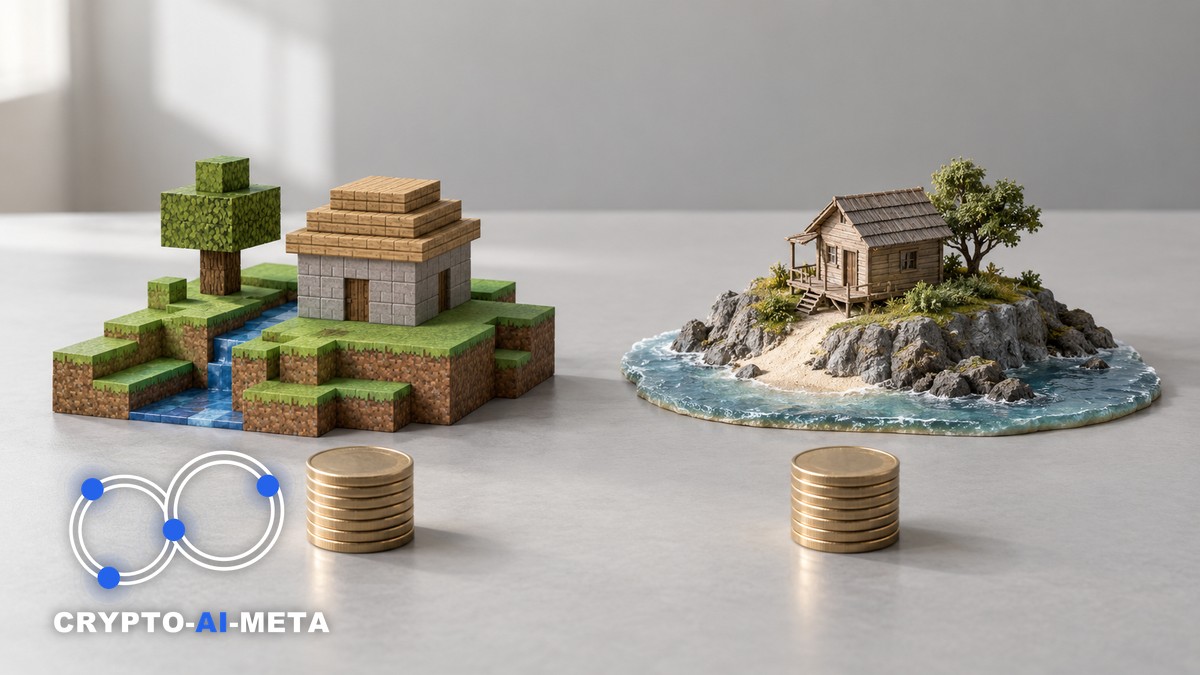
Table of Contents
The quick comparison: bigger payouts versus different incentives
Roblox lets creators earn through game purchases, subscriptions, avatar items, and other routes. Eligible Earned Robux can be exchanged for money through the Developer Exchange program, known as DevEx. Fortnite pays eligible island developers from an engagement pool and now also supports in-island transactions.
Think of Roblox as a game business with several possible checkout lanes. Think of Fortnite as a game business with both an attention-based payout and its own sales lane. Those are editorial comparisons, not official categories. Neither platform hands out a wage simply because someone publishes a map.
The headline numbers also cover different ecosystems. An avatar designer, an independent game maker, and a studio can all contribute to Roblox’s total. Fortnite’s island payouts describe a different group. A platform-wide figure cannot settle which option pays a comparable solo developer more.
So Roblox wins the verified same-year total-payout comparison. The individual earnings contest remains open. A strong Fortnite island can beat a weak Roblox game, and a well-run Roblox business can outperform an expensive Fortnite project.
How Roblox creator payouts work
Roblox creator earnings usually involve two steps: earn the platform currency, then convert eligible earnings into cash. The current standard DevEx rate is $0.0038 for each Earned Robux. That means 100,000 eligible Earned Robux converts to $380 before personal taxes and business costs.
DevEx is the cash-out window. You earn Robux in your game, then exchange the eligible ones for dollars.
Older balances matter. Earned Robux from before September 5, 2025, at 10 a.m. Pacific uses the previous $0.0035 rate. Purchased Robux does not become eligible cash-out income just because it sits in an account. DevEx applies to qualifying earnings, subject to Roblox’s review.
There is now another rate. Since June 8, 2026, certain qualifying purchases by age-verified U.S. players aged 18 or older can generate Earned Robux exchanged at $0.0054. Eligible games and purchase categories must meet the program’s rules. The higher rate is not a blanket upgrade for every creator or every sale.
At that higher rate, 100,000 qualifying Earned Robux would convert to $540. The arithmetic is simple. Qualifying for it is the part that deserves attention. Build your budget around the earnings categories your game can actually receive, rather than the highest rate on a headline.
Now comes the easily missed distinction: player spending is not the same as your Earned Robux balance. For your own game passes sold in your own game, Roblox says you receive 70% of the Robux spent. Other products and sales routes can have different rules.
That is why “Roblox pays 70%” is an incomplete answer. It describes a particular Robux transaction share, not a universal share of the dollars players originally paid. The cash-out step still matters.
A Roblox example that makes the math clear
Suppose players spend 100,000 Robux on your own passes inside your game. At the stated 70% share, that produces 70,000 Earned Robux. At the standard $0.0038 DevEx rate, the resulting cash-out amount is $266, assuming the earnings qualify.
If those same earnings meet the separate U.S. adult-rate requirements, 70,000 multiplied by $0.0054 equals $378. These are worked examples, not estimates of typical sales. They also exclude taxes, advertising, contractor payments, and any other costs you incur.
Notice what the example does not assume: a fixed dollar price for the player’s Robux. Purchase bundles, regional pricing, and purchase channels make a shortcut from Robux spending to retail dollars unreliable. Follow the actual transaction and then apply the relevant exchange rate.
For your own planning, keep three columns: player spending, eligible creator earnings, and cash received. That small habit prevents a large mistake. A screenshot showing a big currency balance can look impressive while saying little about spendable profit.
The catch: 100,000 Robux of player spending is not $380. At the 70% share and the standard rate it is $266, before taxes and costs.
How Fortnite engagement payouts work
Fortnite engagement payouts use a different structure. Epic places 40% of eligible net revenue from its Item Shop and related real-money purchases into a pool. That pool is shared across eligible developer islands and Epic’s own islands according to its formula.
Epic puts a slice of its revenue in a shared pot and splits it by how much, and how long, people play.
The important words are “net revenue” and “shared.” This is not 40% of every retail dollar, and it is not 40% reserved exclusively for independent creators. Your island receives an allocation based on measured engagement, not a fixed payment for each visit.
Epic’s current documentation lists active playtime, island retention, and playtime around Item Shop V-Bucks spending among the formula’s metrics. This creates an incentive to bring players back and give them something worth doing when they return.
There is no official universal rate that lets you multiply a visitor count by a guaranteed dollar amount. A payout depends on the pool, eligible engagement, and the allocation formula. A creator’s results from one month cannot safely become everybody else’s earnings forecast.
This model can suit a game that players enjoy repeatedly without needing to buy an upgrade. But it also adds uncertainty. You can improve your game and still face a changing pool or stronger competition for the same attention.
Fortnite’s new sales lane changes the contest
Fortnite is no longer just an engagement-payout story. In-island transactions allow developers to sell supported items, gameplay properties, and access using V-Bucks. This adds a direct commercial relationship alongside the engagement system.
Epic’s detailed transaction overview says developers ordinarily receive 50% of the calculated V-Bucks value. The temporary offer raises that to 100% from January 9, 2026, through January 31, 2027. Another account-level page uses broader 2026 wording; this article uses the more specific dates in the transaction overview.
“100%” sounds like creators keep every dollar a player spends. They do not. Epic calculates V-Bucks value after platform and store fees. Its documentation currently describes 100% of that value as approximately 74% of retail spending, and 50% as approximately 37%. Those are illustrative estimates, not fixed rates.
A sale-based comparison therefore needs a shared denominator. Roblox’s Robux share, Roblox’s cash-out rate, Fortnite’s calculated V-Bucks value, and Fortnite’s engagement pool cannot be placed in one percentage ranking without explaining what each measures. For a blockchain take on virtual-world economies, see Decentraland vs. The Sandbox and how NFTs secure digital ownership.
When the temporary Fortnite offer ends, developers may need stronger conversion or lower costs to preserve margins. A project that only breaks even under the promotional share could struggle under the ordinary rate. Teams should test both cases before committing to a larger staff or an expensive content schedule.
When the temporary Fortnite share ends in early 2027, expect some developers to raise prices or add more in-game purchases to protect their margins. The downside is that players may push back if a free game starts to feel like a store.
What the big payout totals hide
Roblox’s latest economic-impact release provides a useful reality check. It says more than 42,000 creators were part of DevEx, with a median payout of approximately $1,500 during the twelve months ended June 30, 2026. That group is narrower than everyone who tries creating on Roblox.
A median is the middle observation in the reported group. It is not a salary promise, a minimum, or the average earnings of all aspiring developers. It also says nothing by itself about hours worked, team size, or costs.
Fortnite’s official 2024 review reports $352 million paid to creators and about 70,000 creators in its ecosystem. Dividing those figures would produce a crude average, but the published creator count is not a verified count of payout recipients. That calculation would not reveal the median or a beginner’s likely income.
The safe takeaway is narrower: both platforms support meaningful businesses, while aggregate success can conceal very uneven outcomes. Public examples of top earners show what is possible. They do not tell you how likely it is.
For a fair comparison, ask for the same year, the same creator category, the same cost treatment, and the same measure. Without those details, “pays creators more” can become a marketing claim wearing a spreadsheet costume.
Expect platforms to publish more detail on typical earnings as parents and regulators ask harder questions about creator income. That could make the median a more common headline than the total. The risk is that young creators keep chasing top-earner stories instead.
Your biggest expense may be getting discovered
Free access to creation tools does not make a game free to build. Art, design, scripting, testing, updates, and promotion all take time. Hiring people converts that time into a visible bill. Working alone converts it into hours you could spend elsewhere.
An appealing thumbnail may win the first click. The opening minutes decide whether that click turns into a player. Returning players then determine whether a small game develops a stable audience or needs constant replacement traffic.
Before buying promotion, measure where people leave. Do they understand the goal? Can they finish the first task? Does the game offer a reason to return? Spending more to send players into a confusing opening usually makes the problem more expensive.
Discovery also changes the meaning of a generous revenue share. Keeping a larger slice of almost no sales still produces almost no income. A smaller share attached to a loyal audience can produce a better business.
That does not mean promotion is pointless. It means promotion should follow evidence. Use small tests, track their costs, and compare the revenue they bring with the money they consume. Treat viral success as upside rather than the only plan.
Tools, age rules, and the work behind the payout
Roblox Studio and Unreal Editor for Fortnite, or UEFN, offer different workflows. Roblox may suit a creator who wants to prototype a compact social or progression-based game. UEFN may suit a team that already understands Unreal-style world building and wants detailed environments. Those are practical judgments, not guarantees.
UEFN’s installation guide lists hardware and software requirements that deserve a check before work starts. Your existing equipment and skills affect the real cost of choosing a platform. The best tool is often the one that lets your team test a playable idea sooner.
Age requirements also differ. Roblox DevEx starts at age 13, subject to its other requirements. Fortnite engagement payouts are available to developers aged 18 or older. Meeting an age threshold alone does not establish full program eligibility.
Cash-out rules affect smaller projects. Roblox requires at least 30,000 Earned Robux for a DevEx request. Fortnite’s monetization documentation describes a $100 payout minimum within a twelve-month window. Read current terms and complete payment and tax onboarding before counting on a withdrawal.
Licensed content can bring another cost. Epic’s partner fee schedule lists licensing deductions from certain engagement payouts. A familiar character may help a game attract attention, but the contract can reduce what the developer keeps. Check the specific partner rather than assuming every template has identical economics.
Licensing deals may become a bigger part of creator income as brands move into game worlds. The negative side is that deductions could leave small developers with a thinner share than the headline rate suggests.
AI could make building cheaper and standing out harder
AI-assisted creation could lower the time needed to produce prototypes, scripts, and basic assets. That may help small teams test more ideas. But easier production could also fill discovery feeds with similar games, making attention harder to earn even as building becomes cheaper.
The business lesson is to distinguish output from player value. Producing twice as many objects does not automatically make a game twice as fun. A useful tool removes a bottleneck; it does not remove the need for a clear idea, careful testing, or consistent creative choices.
Roblox’s September 2026 release describes Build, a prompt-based starter-game tool that is rolling out in a limited number of countries. That is an example of the direction of travel, not proof that a complete profitable game can be created without skill. Our guide to AI game makers and young creators covers what these tools can and cannot do.
As tools spread, durable advantages may move toward distinctive mechanics, trusted communities, and reliable updates. The negative risk is a race toward copied concepts and aggressive purchases. Platforms and creators will need to protect player trust if they want larger economies to produce lasting businesses. Where the metaverse is heading is covered in Meta’s strategy for AI, the metaverse, and crypto and why AI glasses are replacing the metaverse.
A practical way to choose your first platform
Start with one game concept and one target player. Write down what that player does in the first session, why they return, and what they might reasonably pay for. Then choose the platform that supports those behaviors with the least unnecessary work.
For Roblox, estimate qualifying Earned Robux from the specific products you plan to sell. Apply the standard rate first. Model the higher adult rate separately only when the game and purchases meet its conditions. Add eligible rewards conservatively rather than assuming every session earns them.
For Fortnite, separate engagement payouts from in-island sales. Use your own early results to build a range for engagement income. For sales, compare the temporary offer with the ordinary share. Keep licensed-content deductions and refunds visible in the budget.
Finally, give the project a stopping rule. Decide how much time and money you can spend before the game must show returning players or credible revenue. A small experiment can fail usefully. An open-ended project can keep consuming resources long after its assumptions stop working.
Track profit per month and profit per hour. A project paying $800 after $700 of direct costs leaves $100 before tax and the value of your labor. That hypothetical example matters more to a small creator than another platform announcing a record total.
Give each prototype the same test budget so the comparison stays useful. Compare the number of players who return, the revenue attached to those players, and the hours needed for updates. Keep a record of failed tests as well as successful ones. Otherwise, the best-looking result can hide weeks of work that produced nothing. A platform choice becomes clearer when the evidence comes from your own game. Start small, measure honestly, and expand only when the results support the next expense. That approach keeps the decision grounded in actual performance.
So, which gaming world pays creators more?
Roblox leads the verified 2024 total-payout comparison and has multiple established earning routes. Fortnite offers an engagement pool plus a newer direct-sales model, with a temporary share that makes 2026 an unusual comparison year.
Neither fact establishes a universal winner for your game. Choose Roblox if your concept and skills fit its economy. Choose Fortnite if your team can build for its audience and make its engagement and sales systems work together. Judge the outcome by cash after costs.
One final reminder: Robux and V-Bucks are platform currencies, not investment tokens. Their creator payout systems should not be confused with crypto yield or ownership of the underlying platform. The opportunity here is building a game business, with all the work that involves. For the real thing, read what a token is and crypto yield explained.
The real winner is the creator who can keep players coming back without spending more than those players generate. Big worlds create opportunities. Good unit economics turn an opportunity into income.
Sources
- Roblox — The Global Impact of Creation on Roblox, September 2026.
- Roblox Creator Hub — Roblox Developer Exchange Program, accessed October 4, 2026.
- Roblox Creator Hub — U.S. 18+ exchange rate, accessed October 4, 2026.
- Roblox Creator Hub — Monetize your games, accessed October 4, 2026.
- Roblox Creator Hub — Creator Rewards, accessed October 4, 2026.
- Epic Games — Fortnite Ecosystem 2024 Year in Review, January 22, 2025.
- Epic Developer Community — Engagement Payout in Fortnite Creative, accessed October 4, 2026.
- Epic Developer Community — In-Island Transactions Overview, accessed October 4, 2026.
- Epic Developer Community — Account Level Monetization, accessed October 4, 2026.
- Epic Developer Community — Install and Launch Fortnite Creative and Unreal Editor for Fortnite, accessed October 4, 2026.
- Epic Games — IP Partner Licensing Program Fee Schedule, accessed October 4, 2026.