AI Overview: Meta moved Horizon Worlds toward mobile because a phone is an easier door than a headset. New investment now goes to phone-based social games and AI creation tools. Existing VR worlds were not switched off. A planned shutdown was partly reversed in March 2026.
Last Updated: October 2026
Key Points:
- Meta put Horizon Worlds’ new development behind mobile in February 2026.
- Existing VR games stay supported after a March 2026 reversal.
- Horizon Create (phones) and Horizon Studio (browsers) are in gradual early access.
- Reality Labs lost $4.619B in Q2 2026, but Meta does not report Horizon Worlds alone.
Meta’s virtual-world bet has found a very ordinary new front door: the phone already in your pocket.
That sounds less dramatic than stepping into the internet through a headset. It is also easier to explain to a friend. Open a game, join a session, and play. No headset purchase needs to come first.
That is the basic business logic behind Horizon Worlds’ mobile shift. Meta wants more people making and playing social games, with fewer steps between seeing something interesting and trying it.
But the headline needs one qualification. Meta shifted Horizon Worlds’ development priority toward mobile; it did not simply finish switching off every existing VR world. A proposed shutdown was partly reversed in March 2026.
The story is about distribution, creator economics, and a change in product strategy. It is also a lesson in why an impressive technology can struggle when everyday use asks too much of the customer. More on this world in our Games section, and for the bigger picture see Meta’s strategy for AI, the metaverse, and crypto.
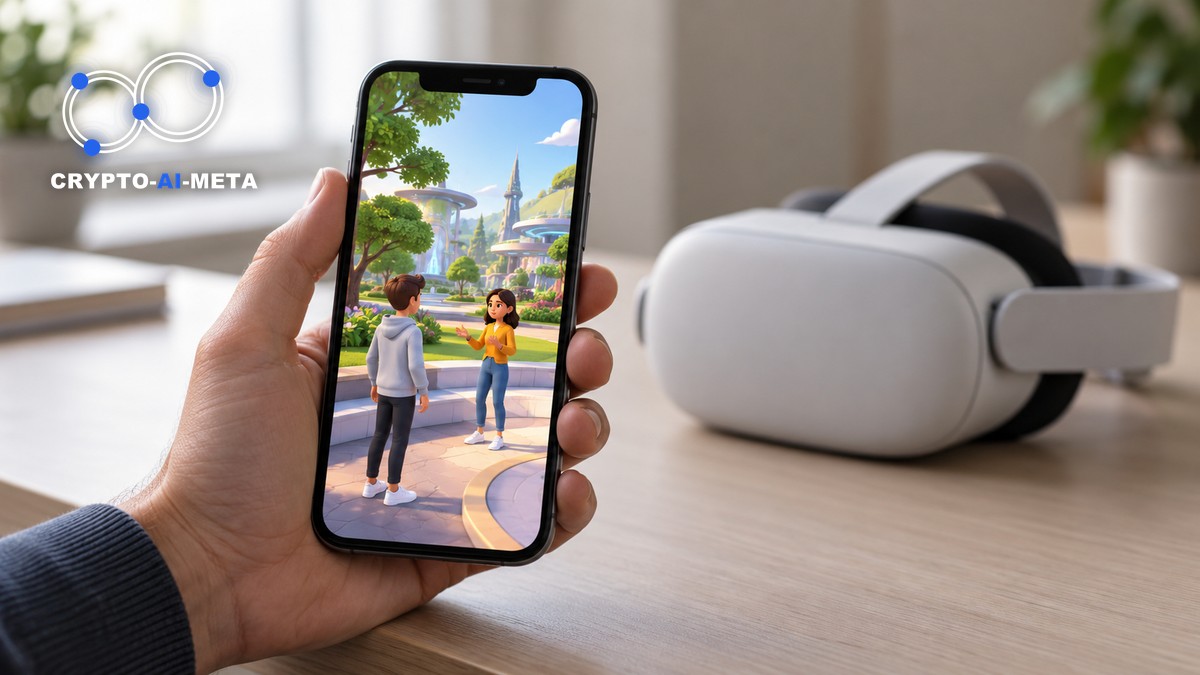
Table of Contents
What Meta changed, and what it kept
In February 2026, Meta said it was separating Quest’s VR platform from Worlds and concentrating the latter almost entirely on mobile. That is the core strategic change.
A subsequent transition notice planned to remove the Horizon Worlds VR app in June. It also redirected creator incentives toward mobile content.
Then came a reversal. UploadVR reported on March 19 that CTO Andrew Bosworth said existing VR games would remain supported, while most effort would go toward mobile.
These announcements are easy to flatten into a misleading sentence. “Meta ended VR” ignores the wider Quest platform. “Nothing changed” ignores the direction of new development.
The useful distinction is between maintaining access to existing experiences and choosing where to put the next round of investment. A company can do the former while shifting the latter.
Meta is keeping the old VR worlds running. It just will not put new money there first.
Older official notices still display the superseded shutdown plan. Players should check their particular world and account rather than rely on that date alone. Creators need an even sharper question: which tools, incentives, and distribution paths will support the project being built now?
Meta’s public Worlds listing still describes headset, phone, and laptop access. It corroborates the distinction between mobile priority and complete VR closure.
Mobile was already part of the plan
Phones did not suddenly appear in Meta’s thinking this year. At Connect 2022, the company discussed web access that would let people join virtual worlds from phones or laptops.
The important shift is from another way to visit to the main place to grow. Adding mobile support to a headset-centered product and designing a mobile-first product are different decisions.
In the first case, a phone may receive a smaller version of an experience built for another device. In the second, short sessions, touch controls, and quick entry influence the design from the beginning.
Imagine a virtual cooking game. A VR version might emphasize reaching for ingredients with tracked hands. A phone version might focus on fast taps, simple recipes, and competing with a friend during a short break.
Both could be enjoyable. Neither becomes good merely by copying the other’s controls.
Meta’s move therefore involves more than shrinking a virtual world to fit a smaller display. It changes what kind of experience is easiest to build, share, and sustain.
The headset was a barrier before the game began
VR can create a striking sense of presence. A conversation with someone who seems to stand beside you feels different from watching a flat screen.
That strength comes with a separate set of requirements. Someone needs access to a headset, space to use it, enough battery, and a reason to put it on. Friends also need compatible ways to join.
None of those requirements makes VR a bad product. They do make casual participation harder than opening something on a device already used throughout the day.
Consider two friends sharing a game after class. If one uses a phone and the other must retrieve a headset at home, the invitation may wait. A delay can be enough for both to move on.
This is a practical explanation of friction, not a measured estimate of how many people leave Horizon at each step. Meta has not supplied that conversion breakdown in the sources reviewed here.
For a social product, fewer entry steps can matter twice: they help the first player arrive and make it easier for that player to bring someone else.
A social world needs people at the same time
A multiplayer place can look beautiful and still feel empty. Its value depends partly on who is there when a visitor arrives.
That creates a difficult starting problem. Players want lively experiences. Creators want players before spending more time on updates. The platform needs both groups to keep showing up.
Mobile potentially widens the pool of people who can participate. More possible visitors, however, are not the same thing as more active visitors. A person can open a game once and never return.
The central challenge is repeat use. Can someone find a worthwhile session quickly? Can friends join without confusion? Does the experience give them a reason to come back after the novelty fades?
Over the next two years, Horizon’s mobile strategy could produce more short social games built around quick invitations and repeat visits. The upside would be easier participation across friendship groups. The downside is that creators may favor familiar, easily promoted formats over unusual experiences that need time to explain. A larger audience could bring more variety, but it could also reward sameness.
That tension explains why the phone solves only part of the problem. It opens the door. The experience must still make people want to stay.
Meta wants to use its existing distribution
A small game studio usually faces two separate jobs: making a game and finding its audience. The second job can be harder than expected.
Meta already operates places where people discover entertainment and communicate with friends. That gives it a potential route to players without asking everyone to begin with a new destination.
September’s official Connect recap describes plans for games made with the new Horizon tools to reach players within Facebook, Instagram, and Horizon feeds.
The business logic is straightforward. A clip shows a fun moment. Someone wants to try it. The distance between watching and playing becomes shorter.
That possibility should not be confused with a guarantee that every creator receives meaningful reach. A feed has limited attention, and an audience for videos does not automatically become an audience for games.
For Meta, distribution could be an advantage. For creators, it could also be a dependency. Changes to recommendations or eligibility might affect a project’s traffic even when the game itself has not changed.
A sensible business plan should account for both sides of that bargain.
The catch: a feed can send players to your game today and stop tomorrow. You do not control the algorithm.
September’s AI tools make the pivot more concrete
On September 24, Meta introduced Horizon Create and Horizon Studio. Its announcement positions Create on phones and Studio in browsers, with projects moving between them. Access is rolling out gradually through a waitlist.
Those details matter because they make mobile a place to create, rather than simply a place to consume.
A young builder could start with a small idea and work toward a playable result with AI assistance. A more experienced creator could use deeper controls to refine the mechanics and presentation.
That is the intended opportunity, not proof that every generated game will be polished. An assistant can produce something plausible while leaving awkward controls, unclear rules, or errors that appear only after several players join.
The right test remains the same: can someone unfamiliar with the project understand it and enjoy playing it?
For game development for beginners, faster setup can be valuable. The best outcome is that early success motivates learning. The weaker outcome is a creator who can generate projects but cannot explain, improve, or repair them. The tools themselves are covered in Meta’s AI game tools and Instagram playable feeds.
Why Quest developers also wanted a change
The mobile pivot is not only about reaching people without headsets. It also separates products with different jobs.
In its March GDC update, Meta said the experiment of placing individual Worlds experiences in the Quest store had not demonstrated the hoped-for improvement in device retention. The company also described strong developer opposition to that design.
A store needs to help someone choose a useful app or game. A social-world directory may need to highlight places, sessions, friends, and trending activities. Mixing those discovery systems can create competing priorities.
Think of a bookstore that fills its shelves with event invitations. Some invitations may be interesting, but customers who came to buy a book still need to find one.
Separating the systems could give each a clearer purpose. It does not guarantee better discovery, and it does not mean all the earlier experiments were pointless. It means Meta reached a different conclusion after trying them.
For developers, the practical issue is visibility. They need to know where their product will appear and what kind of audience that surface serves.
Financial pressure matters, but the accounting has limits
Meta’s second-quarter 2026 results reported a $4.619 billion operating loss for Reality Labs. That segment includes virtual- and augmented-reality hardware, software, and content. For the investor view, read META stock and Reality Labs.
The number gives useful context for demands that spending produce better results. It does not reveal Horizon Worlds’ separate loss, because Meta does not publish that figure in the segment table.
Calling the entire amount a loss from Horizon Worlds would misstate the evidence. It would also hide the fact that a large division can contain several products with different stages of development.
The relevant management question is about future allocation. Given another dollar and another development team, where is there a better chance of useful progress?
Mobile offers a route to test social games with people who do not first need dedicated VR hardware. That can be an attractive strategy even if Meta continues investing in immersive devices.
The pivot should therefore be judged as a change in priorities within a broader business, rather than a simple equation in which one app explains every dollar of spending.
What creators gain, and what they risk losing
For creators, the obvious benefit is access to a different potential audience. The less obvious benefit is a different production process.
A small mobile game can focus on a clear action, a quick reward, and an easy invitation. That may fit a solo creator’s time better than an elaborate immersive environment.
But switching platforms can require substantial work. Movement, camera position, interface size, and instructions may all need to change. A mechanic that relies on physical gestures may need a new version rather than a simple port.
Existing VR creators also invested in communities and skills tied to that format. Maintaining an old experience does not necessarily provide the same future opportunity as active investment in new ones.
As AI creation becomes easier, Horizon may attract more first-time builders and small teams. That could lower the cost of testing ideas. It could also increase competition for attention and push creators into repeated spending on updates or promotion. The strongest position may belong to people who can improve an original game after feedback, rather than simply produce more first drafts.
For a creator, the decision is about fit. Choose the platform that supports the intended experience and the people expected to play it.
The business case needs more than a bonus program
Meta announced a $50 million creator fund in February 2025, with rewards connected to performance across areas such as retention and in-world purchases. The program was subject to eligibility conditions.
Funding can help a young platform attract content. It is not the same thing as a permanent business model for every participant.
Imagine an independent team that earns an incentive while developing a game. The useful question is whether the project can support continued work if that incentive changes.
Track the full costs: development time, testing, art, support, and any paid promotion. Then compare them with actual revenue and recurring activity. A popular launch weekend may still leave the team with expensive upkeep.
A brand considering a Horizon campaign should also define the desired result. Is it entertainment, product education, qualified interest, or purchases? Visits alone may say little about that goal.
Start with a small experiment and a clear measure of success. A platform announcement can justify testing. It cannot replace evidence that a particular business idea works.
Why this is not a crypto adoption story by itself
For CryptoAIMeta readers, the connection is the economics of virtual worlds, AI creation, and platform control. The mobile shift does not itself establish a new role for cryptocurrency.
An avatar, virtual item, or digital reward does not automatically need a blockchain. A token would be a separate product choice, with its own costs and reasons.
The useful ownership question is more practical: what can a creator keep, export, or rebuild if the platform changes direction?
Before committing serious time, review the terms for assets, code, purchases, and distribution. Keep copies of work where permitted; do not assume a world can be exported intact. Understand which functions depend on the platform’s own systems.
A mobile virtual world can still be a tightly controlled environment. Reaching it through a familiar phone does not automatically make it portable or open.
That is the broader lesson for anyone building in the metaverse. Easier access and greater control are different benefits. A product can offer the first while limiting the second. Compare open worlds in Decentraland vs. The Sandbox and how NFTs secure digital ownership, and see how hardware is shifting in why AI glasses are replacing the metaverse.
What Meta could lose by going mobile-first
The strongest argument for VR is the experience itself. Spatial interaction can make a shared activity feel more immediate than tapping on a small display.
A mobile-first strategy can reach people more easily while giving up some of that distinctiveness. If the result feels like another collection of phone games, the product needs a clear reason to compete for attention.
There is also a relationship cost. Early creators and players helped establish the platform before the direction changed. Confusing notices and reversals can make them less confident about future promises.
Looking further ahead, Horizon could become a layer of social games woven into Meta’s existing apps, while dedicated VR experiences develop on a separate track. That would be a practical departure from a single shared virtual destination. The negative possibility is stronger dependence on recommendation systems, with creators chasing visibility and users encountering more disposable content. Sustainable growth would require enjoyable games and dependable rules, not just easier generation.
A successful pivot should make the product clearer without treating the people who built its earlier version as an afterthought.
How to judge whether the shift works
The best signs of progress are easy to describe and harder to achieve.
Players should find worthwhile games, understand them quickly, and return voluntarily. Creators should be able to improve their projects, reach an audience, and understand how compensation works.
Public evidence would be stronger if it showed the size of the active audience, repeat use over time, and the distribution of earnings across creators. A handful of success stories cannot explain the typical outcome.
AI tools should also be judged by completed work. How much time is needed to fix generated systems? Can creators control changes? Does a project remain maintainable after updates?
For businesses, the standard is whether the experience produces the result that justified the budget. For young builders, it may be whether the project develops useful skills and reaches people who enjoy it.
Those measures are more informative than declaring the metaverse dead or saved whenever the product roadmap changes.
The phone is the entry point; the game is the reason
Meta moved Horizon Worlds’ growth strategy toward mobile because accessibility, distribution, and creator participation offered a different path than a headset-centered social destination.
The qualification matters: existing VR access and the wider Quest ecosystem are separate from the mobile priority for new Horizon investment.
The announced next chapter emphasizes social games and AI-assisted creation connected to places people already spend time. That can create opportunity, but quality and platform dependence remain central to its success.
A phone makes joining easier. An enjoyable experience gives someone a reason to invite a friend. Other creator platforms are compared in Roblox vs. Fortnite and AI builds games from one sentence.
Sources
- Meta developer blog. Our Renewed Focus in 2026. February 19, 2026.
- Meta Community Forums. Updates to Your Meta Quest Experience in 2026. March 2026 transition notice; contains superseded shutdown language.
- UploadVR. Meta Backtracks, Will Keep Horizon Worlds VR Support “For Existing Games”. March 19, 2026.
- Meta Newsroom. Meta Connect 2022: Meta Quest Pro, More Social VR and a Look Into the Future. October 11, 2022.
- Meta developer blog. Meta Connect Recap. September 2026.
- Meta developer blog. Meta Connect Recap: Sign Up for Early Access to Horizon Create and Horizon Studio. September 24, 2026.
- Meta developer blog. The State of VR at GDC 2026: Building a Sustainable Future. March 12, 2026.
- Meta Investor Relations. Meta Reports Second Quarter 2026 Results. quarter ended June 30, 2026.
- Meta developer blog. Empowering Meta Horizon Creators With a New $50M Fund and Advanced Tools. February 20, 2025.
- Meta. Worlds on Meta Quest — public experience listing. accessed October 4, 2026.