AI Overview: Clash Royale Clan Wars 2, also called the River Race, is the game’s weekly clan mode. Each player builds four war decks that share no cards, so 32 different cards in total, and plays up to four battles per battle day. Duels, a best-of-three, pay the most medals: 250 for a win and 100 for a loss. A week has three training days and four battle days.
Last Updated: November 2026
Key Points:
- Four war decks, 32 different cards, and each deck can be used once per battle day.
- A week is three training days (gold only) plus four battle days (medals count).
- You get four attacks per battle day, and unused attacks do not carry over.
- Duels pay 250 medals for a win, 1v1 battles pay 200, and boat battles pay 125.
- A season lasts four or five weeks, and the last week is the Colosseum, which decides league placement.
Table of Contents
What Clan Wars 2 Is
Clan Wars 2, also called the River Race, is a weekly race between five clans. Each clan sails one boat down a river. Every battle you win pushes the boat forward.
Each player brings four decks, and no card can appear in two of them. That adds up to 32 different cards. The game uses your own card levels, so there are no forced decks and no collection day like the original Clan Wars had.
Why it matters: the mode rewards depth, not one great deck. A player with one maxed deck and three weak ones loses medals fast. A player with 32 well-leveled cards wins more often and carries the clan.
A race lasts one week, and a clan of up to 50 members races against four other clans in the same league. Supercell announced the mode in July 2020. The structure has held up well since then, with four war decks, three battle types and a Colosseum at the end of each season. What changed over the years is the cards, the meta and the level cap, which became Level 16 on November 24, 2025.
The facts: four decks, 32 cards, up to 50 players per clan and five clans per race. What many players assume: one strong deck is enough. What that means: it is not, because decks 2, 3 and 4 get played too. Still unknown: how future Evolution and Hero cards will fit into war decks.
Clan Wars has kept the same bones for years, and that is likely to continue. The next changes will probably come from card balance and new Evolution and Hero cards, not from a brand-new mode. The negative effect: every new Evolution or Hero a player owns widens the gap with players who do not have it, and with four decks that gap shows up four times a day.
How a River Race Week Works
Training Days and Battle Days
A week runs seven days: three training days first, then four battle days.
- Training days: the boat is locked, battles pay gold only, and nothing moves the race. Use these days to practice your decks.
- Battle days: battles pay medals and gold, the boat moves, and rival boats can be attacked.
The catch: you get four attacks per battle day, and unused attacks do not carry over. Skip a day and those medals are gone for good.
Quick math: a full clan of 50 has up to 200 attacks on every battle day, and up to 800 across the four battle days. Every unused attack is a pile of medals the clan never gets back.
Medals and the Colosseum
Medals are the score. Every member’s medals are added together, and the clan total sets the order of the race.
A season lasts four or five weeks. The last week skips the River Race, and clans go to the Clan War Colosseum instead. There they fight directly for league placement, which sets the next season’s gold rewards and war chest.
The Finish Line and the War Chest
Each clan’s boat sails toward the War Gate, the finish line of the river. The first clan across it takes the best prizes of the week.
Every member who took part in the war week earns a River War Chest. It arrives at the end of the week, or as soon as the clan crosses the finish line early. A clan that is far behind still pays out to every player who played, so attacks are worth playing even when the race looks lost.
Why it matters: medals decide where the clan finishes, and where it finishes shapes the prizes. One member who skips the week costs the whole clan, not just themselves.
Getting Ready for Colosseum Week
What it is: the final week of a season. The River Race pauses, and clans fight each other directly for league placement.
Why it matters: the result sets your league for next season. Guides call it the week to show up for.
The prep: level the cards in all four decks before the week starts, make sure every member has at least three decks ready, and agree on who plays when. Guides list three decks as the minimum for Colosseum week.
The Three Battle Types Compared
| Battle type | Format | Decks used | Medals (win / loss) | Best for |
| Duel | Best of three | Up to 3 decks | 250 / 100 | Most medals per attack |
| 1v1 battle | One normal match | 1 deck | 200 / 100 | Times you have a clear deck edge |
| Boat battle | PvE against defense towers | 1 deck | 125 / 75 | Slowing a rival boat |
What to watch: these medal numbers come from 2026 community guides, because Supercell does not publish a public medal chart. Check your own war screen if a number looks different.
Quick math: a player who wins four Duels in a day earns 1,000 medals. The same player winning four boat battles earns 500. Same effort, half the medals.
How to Build Four War Decks
The rule for Clan Wars 2 decks is simple: four decks, no repeated cards. The hard part is making each deck actually work. If deck building is new to you, start with the definitive deck-building guide, then come back here.
Deck 1: Your Ladder Deck
Deck 1 should be the deck you already play on the ladder. It is most likely your highest-level deck and the one you know best. Leave it alone in most cases. The only reason to change it is to free up a card so the other decks can reach a higher average level.
Decks 2 and 3: Two Different Playstyles
Pick a win condition and an archetype for each deck, and keep them different. A Graveyard deck and a Mortar bait deck make a good pair, because opponents rarely have the same answers for both. Then add the cards that support each win condition, such as a tank-killer, a big spell and a small spell.
Deck 4: The Boat Battle Deck
Reserve the fourth deck for boat battles. Boat battles are PvE, so they are easier than PvP, and lower-level cards can still win them. Saving your weakest deck for them gives you one great deck, two good decks and one boat deck. The alternative is four mediocre decks.
If your clan skips boat battles, build Deck 4 like Decks 2 and 3.
Here’s the problem: nobody has 32 maxed cards. Maxing a single Common to Level 16 takes about 23,000 copies in total, as shown on the card upgrade costs page. Low-level cards will be in your decks, so choose the ones that still hold up, like the picks in Top 10 Cards for Underleveled Players.
A Four-Deck Set That Works
One balanced set uses 32 different cards across four decks, so no card repeats. These four come from the RoyaleTracker best-decks lists and were picked because they share nothing.
| Deck | Cards | Avg elixir | Win rate (sample) |
| Deck 1: Battle Ram bridge spam (the ladder deck) | 3.6 | 77.0% (993 battles) | |
| Deck 2: Goblin Barrel log bait | 3.2 | 63.0% (2,900 battles) | |
| Deck 3: Bats and Rune Giant cycle | 2.9 | 68.6% (3,800 battles) | |
| Deck 4: Giant Graveyard beatdown (the boat battle deck) | 4.0 | 62.3% (563 battles) |
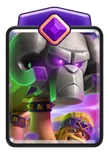
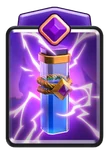


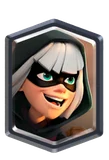

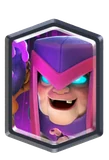


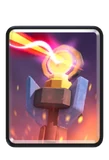
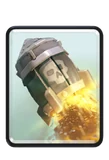
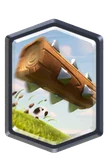
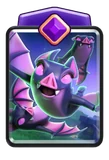


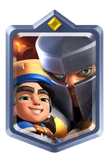


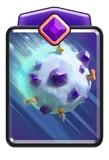

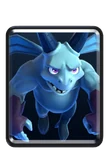



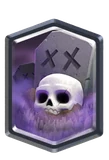
Click a row to open that deck in the Clash Royale Deck Builder. The win rates are ladder samples from the tracker, not war results. Several of these decks use Evolution or Hero slots, so swap in your own cards where you do not own them. Deck 4 is the boat battle deck: a beatdown list that pushes toward the towers fast.
Each deck has a different win condition and different weak spots. That variety makes the set hard to counter.
Your four decks have to cover for each other. If Deck 2 loses to heavy beatdown, Deck 3 should not. Spread the weak spots, and no single opponent can beat all four.
For the 2026 meta, guides name four archetypes that fill a war set well: Hog 2.6 Cycle, Golem Beatdown, Classic Logbait and Royal Giant Fisherman. Our Golem beatdown analysis and Log Bait Mini Pekka deck cover two of them.
How to Tweak Your Decks So Cards Do Not Overlap
Build the decks in two passes. First sketch the shape of each deck and ignore the 32-card rule: a win condition, a support plan and a spell pair. Then fix the overlaps. Pick win conditions that meet different counters, so one answer cannot stop two decks.
Once the four decks are set, switch cards that do a similar job. The Electro Wizard and the Musketeer are a good example. Both are support cards, but the Electro Wizard stuns, and the Musketeer deals more damage.
- Use the Electro Wizard when you need the stun, like in P.E.K.K.A. decks.
- Use the Musketeer when you need damage, like in Giant decks.
- Match the spell to the support card: Zap with the Musketeer, The Log with the Electro Wizard.
- Check synergy last. In a Fireball bait deck, Skeleton Dragons can work better than a Baby Dragon, which frees the Baby Dragon for another deck.
As the level cap keeps rising, deck building will lean even more on collection depth. Players with 32 well-leveled cards will pull further ahead. The negative effect: casual clans may lose members who cannot field four competitive decks, and smaller clans could slide down the leagues.
Duels vs 1v1: Which Mode Wins More?
Duels win. This best of 3 mode pays 250 medals for a win against 200 for a 1v1, and even a lost Duel pays 100.
The facts: a Duel win is worth two boat battle wins. A Duel loss still pays 100, which beats the 75 you get for a boat battle loss.
Duels are also fairer to players without max decks. The opponent in a Duel usually has one great deck and two or three good ones, just like you. In a 1v1 you can meet a player with a maxed deck while you use a weaker one.
Play 1v1 battles only when all four of your decks are strong, or when the match-up is clearly in your favor.
Game 1: Open With Your Best Deck
What happens: the first game sets the tone. The winner plays calm, and the loser has to win twice in a row.
The move: start with Deck 1, your ladder deck. The opponent will probably lead with their best deck too. Play safe, protect your tower and take the win when it shows up.
Game 2: Counter-Pick
What changed: now you know the opponent’s style and a few of their cards.
The move: pick a deck that looks very different from Game 1, ideally one whose counters were missing from their deck. Example: they already played Poison, so a Graveyard deck is a smart pick.
The catch: if you lost Game 1, take a breath first. Pressure loses more matches than bad decks do.
Game 3: Play What You Know
What happens: this game can be the easiest or the hardest. Both players now know what the other has shown.
The move: play your most practiced remaining deck, play safe and stay calm.
Duels will likely stay the main medal engine because they pay the most. If Supercell tilts rewards further toward them, boat battles could fade into a chore. The negative effect: when one mode is clearly the best choice, players stop experimenting, and the whole week starts to feel the same.
Boat Battles and Boat Defense
How a Boat Battle Works
A boat battle is player versus environment. You attack a rival clan’s boat, which is guarded by defense towers that use preset four-card decks. You win by destroying at least one tower. A win slows that clan’s boat, and the clan has to repair it.
Boat battles pay 125 medals for a win and 75 for a loss, so they are the weakest medal source. The point is pressure on rivals, not personal medals.
Tips for Winning Them
- Cards spawn from the towers in a fixed order: card 1, card 2, card 3, card 4, then it repeats. That makes the defense predictable.
- Towers only spawn cards when they take damage, so focus on one tower at a time.
- Time is short. Build an offensive deck, because beatdown decks shine in this mode.
- Spells and buildings are rare in boat defenses, so bring swarms and building-targeting troops. Use the swarms after you take out the swarm killer.
What Boat Defense Means
Boat defense is the other side of the mode: your clan’s cards on the defense towers. It is passive and costs no attack. If you are setting defenses, read our two lists: 5 best boat defense cards and 5 more boat defense cards.
The takeaway for clan leaders: only two or three members should handle boat repairs. Everyone else should play Duels for maximum medals.
The Boatyard: Repairs After a Hit
A boat that a rival clan attacked is damaged and has to be repaired. Repairs happen through the Boatyard task, and a damaged boat falls behind until the work is done.
The move: check the boat at the start of each battle day. If it is damaged, send the repair volunteers first.
Five Mistakes That Cost Medals
- Skipping attacks. Four attacks a day only help if all four get played.
- Overlapping decks. If one card matters in two decks, one of those decks is broken.
- Opening Game 1 with a weak deck. Losing Game 1 puts you under pressure for the rest of the Duel.
- Sending everyone to boat battles. They pay the least medals, so a few members are enough.
- Playing tilted. A bad loss followed by a rushed next game is the fastest way to lose a Duel.
If you only fix one thing, fix the first one.
| Deck | Cards | Avg elixir | Win rate (sample) |
| Elite Barbarians beatdown deck | 4.1 | 68.7% (1,400 battles) |
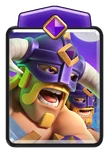




Try it yourself: open the Clash Royale Deck Builder with an Elite Barbarians beatdown deck featuring Evo Elite Barbarians, Evo Zap and Hero Mini P.E.K.K.A, 68.7% in the tracker sample (about 1,400 battles), already loaded. Build the deck, then spread your cards across the four war decks.
What to Watch Next
- A new card, Evolution or Hero release, because it changes which decks fill a war set best.
- Balance patches, which can retire a deck overnight.
- Any change to medal values, since Duels pay the most today.
- The next Colosseum week, so every deck is leveled before it starts.
Why it matters: clans that check these four things each week lose the fewest medals to surprises.
Go deeper: Related reading: the boat defense cards, five more boat defenses and the clan chest guide. For a custom list, the Clash Royale Deck Builder calculates the average cost as each card goes in.
Frequently Asked Questions
How does Clan Wars 2 work in Clash Royale?
Five clans race down a river each week. Players win battles to earn medals, and the clan with the most medals leads the race. Each week has three training days and four battle days.
How many war decks do you need in Clan Wars 2?
Four decks with 32 different cards is the best setup. Guides say three decks is the minimum, but the fourth deck gives you a fourth attack each battle day.
How many medals do you get for a Duel win?
A Duel win pays 250 medals, and a Duel loss pays 100. A 1v1 win pays 200, and a boat battle win pays 125.
Are Duels better than 1v1 battles in Clan Wars 2?
Yes, in most cases. Duels pay more and are fairer for players who only have one maxed deck.
What is a boat battle in Clash Royale?
A boat battle is a PvE attack on another clan’s boat. You destroy a defense tower to win. It pays the least medals of the three battle types.
What is the best war deck in Clash Royale?
There is no single best deck, because you need four. Guides list Hog 2.6 Cycle, Golem Beatdown, Classic Logbait and Royal Giant Fisherman as strong 2026 picks.
What is the River War Chest?
A chest that every member who took part in the war week earns. It arrives at the end of the week, or when the clan crosses the finish line early.
Can free-to-play players compete in Clan Wars 2?
Yes. Nobody has 32 maxed cards, so build Deck 1 around your best cards, lean on Duels where the matches are fairer, and keep your lowest-level cards for the boat battle deck.
The Bottom Line
Clan Wars 2 comes down to four decks, four attacks and one smart habit: play Duels. Build a strong ladder deck first, then two different support decks, then a deck for boat battles.
Looking ahead, clans will probably run more like small teams, with shared deck lists, tracked attacks and strict activity rules. The negative effect: clans that demand too much attendance can burn out their members and lose them.
The takeaway: a clan wins on depth and attendance. Level the cards for all four decks and play every attack.
Building war decks? Our Deck Builder guide shows how to check each deck before you lock it in.
Sources
Researched from the following (no links, listed for transparency):
- Supercell, Clash Royale blog: “Clan Wars 2 is here” / “Clan Wars 2: what you need to know” (July 31, 2020)
- TrophyCoach, Clash Royale clan war strategy guide (updated August 29, 2026)
- Timesaver.gg, Clash Royale Clan Wars Explained: River Race, Boat Battles (2026)
- Guild Order, Clash Royale River Race facts (updated June 7, 2026)
- GamingOnPhone, Clash Royale Clan Wars 2 tips and guide (May 6, 2022)
- Supercell Clash Royale official card data (API), elixir costs and card rarities